
The Sacred Circuit of Yamunotri, Gangotri, Kedarnath & Badrinath
The Char Dham Yatra—comprising Yamunotri, Gangotri, Kedarnath and Badrinath—is considered one of the most sacred spiritual journeys in India, believed to cleanse the soul and liberate devotees from the cycle of life and death. It holds immense religious importance as these holy shrines are associated with divine origins of the sacred rivers Yamuna and Ganga, and the powerful deities Lord Shiva and Lord Vishnu. Pilgrimage to the Himalayas symbolizes an inner journey towards peace, devotion and self-realization, away from material life. The challenging terrain and serene Himalayan environment inspire spiritual discipline, faith and humility. Millions of devotees undertake the yatra every year seeking blessings, healing, and spiritual transformation.
Day 1: Arrival – Haridwar / Rishikesh
Arrival at Haridwar and welcome by Recreation Tour India
Recreation Tour India ensures a seamless and professional experience for all travelers, starting the moment they arrive. Our dedicated tour manager will be waiting at the main exit of Haridwar Junction Railway Station well before the 5:00 AM arrival, holding a clearly visible sign for easy recognition or at the airport as per the schedule of our Guests.
The pre-arranged, comfortable coach will be parked nearby for immediate boarding. After a quick verification of the group members, the group will be promptly escorted to the coach and transferred to Hotel Rudra in just under 30 minutes from Hardwar railway station or within 5 minutes from Dehradun
At the hotel, a swift and hassle-free check-in process awaits, with all room keys pre-sorted to minimize waiting time, allowing guests to immediately settle into their rooms to rest and freshen up after their overnight journey.
An energizing, pre-arranged buffet breakfast will be available at 8:00 AM, providing a hearty start to the day. During breakfast, our expert tour guide will deliver an engaging briefing on the day’s itinerary, safety precautions, and answer any questions.
Finally, the group will reassemble in the lobby by 8:45 AM, ensuring a prompt 9:00 AM departure to begin a full day of exploring the local attractions, demonstrating our commitment to efficiency and guest comfort throughout the tour.
Sightseeing of Rishikesh
Rishikesh, the "Yoga Capital of the World," is a spiritual magnet and an adrenaline junkies paradise nestled on the banks of the sacred Ganges River at the foothills of the Himalayas. Visitors can awaken their inner yogi at one of the many ashrams or immerse themselves in local spirituality by witnessing the mesmerizing evening Ganga Aarti at Triveni Ghat. For those seeking a thrill, the fast-flowing river offers world-class white-water rafting, while bungee jumping, flying fox, and cliff jumping are available nearby for an exhilarating experience. Stroll across the iconic Lakshman and Ram Jhulas (suspension bridges) for panoramic views of the surrounding mountains and temples, and explore the famous Beatles Ashram where the legendary band once sought spiritual guidance. Rishikesh perfectly blends tranquil meditation with high-octane adventure, promising a truly unique and refreshing escape.
Char Dham Yatra – Uttarakhand (10 Days / 9 Nights)
You will leave Hotel Drona – ascending along winding mountain roads through forested stretches, crossing the scenic Doon Valley. The drive then brings you to the banks of the Yamuna River, which you follow upstream through charming hamlets and serene riverside vistas. The route climbs steadily, offering glimpses of Himalayan foothills and fresh alpine air before you reach Barkot. The entire journey covers approximately 150 km and takes about 4–5 hours under good road conditions. Mid-way, it’s wise to pause for a break and enjoy the river view, and start early to avoid late-afternoon arrival in the hills.
Day 3: Barkot – Yamunotri – Barkot
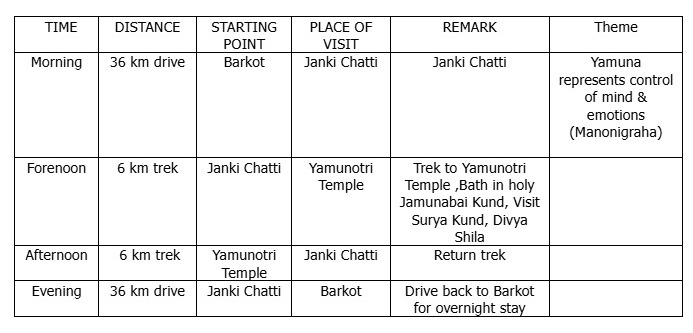
While departing from Barkot you follow the twisting mountain road alongside the gurgling Yamuna River valley, gradually climbing deeper into the Garhwal Himalayas. The motorable part extends to Janki Chatti (or via Hanuman Chatti), where the route ends and the trek begins. From Janki Chatti it’s about a 5-6 km uphill walk (or pony-/palki-ride) to the Yamunotri temple itself. The journey, though short in distance, demands attentive driving and is enriched by tranquil forest stretches, sacred river views and the anticipation of the pilgrimage ahead
Day- 4: Barkot to Uttarkashi
Uttarkashi, located on the banks of the sacred River Bhagirathi, is one of the most revered spiritual towns in Uttarakhand. Known as the Kashi of the North, it is home to the holy Kashi Vishwanath Temple, attracting pilgrims throughout the year. Surrounded by serene mountains and dense forests, the town offers a tranquil atmosphere ideal for meditation and spiritual reflection. Uttarkashi also serves as a major gateway to several Himalayan pilgrimages and trekking routes. The calm riverside ambience and devotional vibrations make Uttarkashi a perfect place to experience discipline, devotion, and austerity on the spiritual journey.


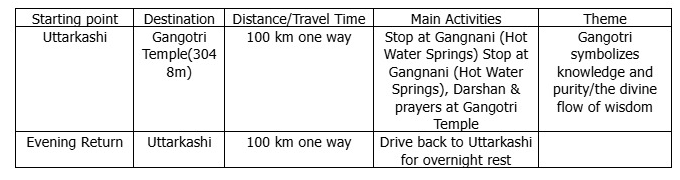
Day 5: Uttarkashi – Gangotri – Uttarkashi (Excursion)
Gangotri, one of the most sacred pilgrimage sites in India, is revered as the origin of the holy River Ganga. Situated at a majestic altitude in the Garhwal Himalayas, it is home to the revered Gangotri Temple, dedicated to Goddess Ganga. Surrounded by snow-clad peaks, pine forests and the rushing Bhagirathi River, the atmosphere here inspires deep devotion and inner purity. Pilgrims visit Gangotri to seek blessings and to honor the legend of King Bhagirath’s penance which brought the Ganga from heaven to earth. The spiritual serenity and breathtaking Himalayan landscape make Gangotri a profound symbol of faith, liberation, and the divine flow of life.
Day 6: Uttarkashi – Guptkashi / Sitapur
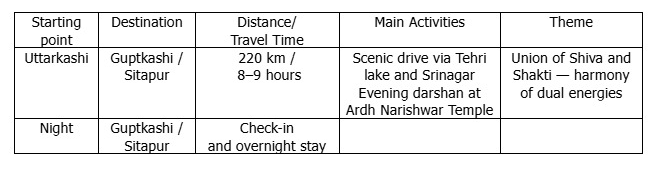
Guptakashi, located in the Mandakini River valley, is an important spiritual stopover on the route to Kedarnath. The town is home to the revered Vishwanath Temple and Ardhnarishwar Temple, symbolizing the unity of Shiva and Shakti. With its serene Himalayan backdrop, Guptakashi offers a peaceful atmosphere for prayer, reflection, and acclimatization before the high-altitude journey ahead. Sitapur, situated nearby, serves as a convenient base for pilgrims due to its comfortable accommodations and easy access to transport for Kedarnath. The region plays a vital role in preparing devotees physically and spiritually for the trek or helicopter ride to the Kedarnath Shrine, blending devotion with the natural beauty of the mountains.
Day 7: Guptkashi/ Sitapur – Kedarnath
Kedarnath, nestled in the lofty Himalayas at an altitude of 3,583 meters, is one of the most sacred pilgrimage destinations dedicated to Lord Shiva. The Kedarnath Temple, believed to be built by the Pandavas and revived by Adi Shankaracharya, stands as a symbol of faith, endurance, and divine grace. Surrounded by snow-clad peaks and the Mandakini River, the atmosphere inspires deep devotion and spiritual awakening. Reaching Kedarnath through a challenging trek or helicopter ride reflects the seeker’s inner journey toward strength, surrender, and transformation. Pilgrims believe that a visit to Kedarnath washes away past karmas and grants spiritual liberation through the blessings of Lord Shiva.
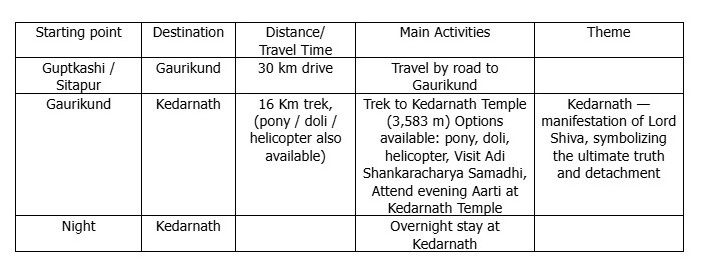

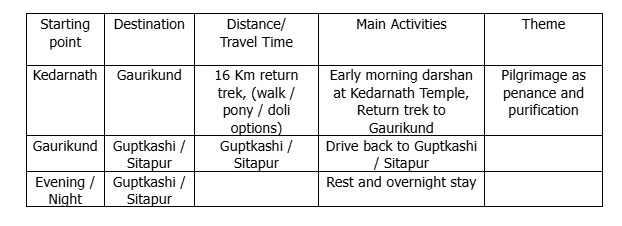
Day 8: Kedarnath – Guptkashi (Return)
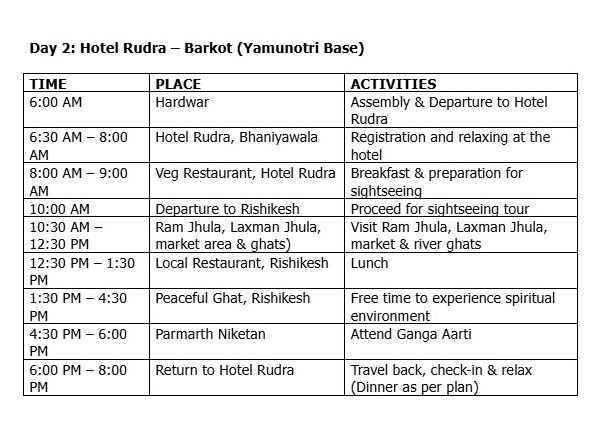
Day 2: Hotel Rudra – Barkot (Yamunotri Base)
Day 9: Guptkashi – Badrinath
Badrinath, nestled between the Nar and Narayana mountain ranges along the banks of the River Alaknanda, is one of the holiest Hindu pilgrimage sites and the abode of Lord Vishnu. The sacred Badrinath Temple, with its striking colorful façade, attracts millions of devotees every year who seek blessings for spiritual liberation and inner peace. Surrounded by snow-covered peaks and hot water springs, the town offers a divine blend of natural beauty and religious significance. Pilgrims visit Tapt Kund for ritual purification before darshan, reinforcing the theme of cleansing and renewal. The spiritual energy, high-altitude environment, and mythological legacy make Badrinath a symbol of devotion, wisdom, and self-realization on the path to salvation.
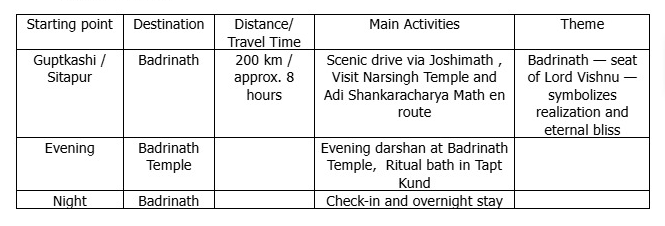
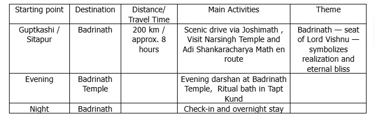
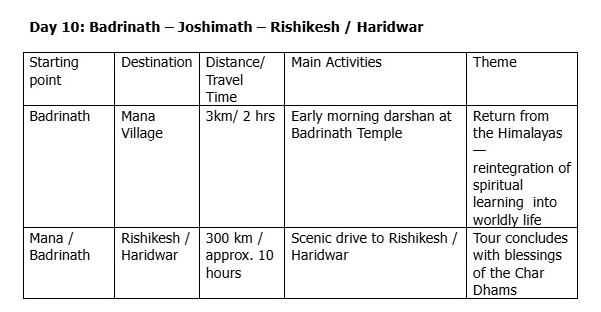
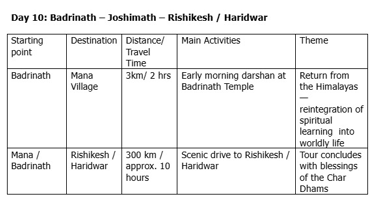
Day 10: Badrinath – Joshimath – Rishikesh / Haridwar
General Precautionary Measures
Always carry a government ID and Char Dham registration documents; checkpoints may require verification.
Begin the journey early each day to avoid landslides, weather issues and road closures during late hours.
Drink only sealed bottled water or properly filtered water to avoid stomach infections.
Wear layered clothing — temperatures range from warm afternoons to very cold mornings and nights.
Avoid plastic usage and help keep the Himalayas clean by using dustbins and carrying reusable bags.
Stay with your group / guide, especially during treks and temple queues.
Medical & Health Precautions
High altitude may cause shortness of breath, fatigue or headache; walk slowly and avoid overexertion.
People with heart disease, asthma, high BP, diabetes or recent health issues must consult a doctor before travel.
Keep essential medicines, including:
Diamox or doctor-recommended medicine for altitude sickness
Acidity, fever, cold & cough tablets
Pain relief spray/gel and band-aids
Stay hydrated — drink warm water frequently to prevent dehydration at high altitude.
Avoid smoking and alcohol throughout the pilgrimage, as both worsen breathing in high altitudes.
If experiencing chest pain, dizziness, breathlessness, or severe fatigue — rest immediately and report to nearest medical camp.